
Construction Loans Explained: What to Know Before Building a Custom Home
If you’re thinking about building a custom home, chances are you’ve already realized that financing a new build feels more complicated than buying an existing house. And honestly, that’s a fair assumption.
Construction loans come with more moving parts, more decisions, and more opportunities for confusion if you don’t understand how the process works before you start. But when planned correctly, construction financing can be straightforward, flexible, and even strategic.
This guide walks through how construction loans really work, how they differ from traditional mortgages, and the most important decisions homeowners should make early to avoid stress later, especially when building in rural Texas or on acreage.
What a Construction Loan Really Is (and What It Isn’t)
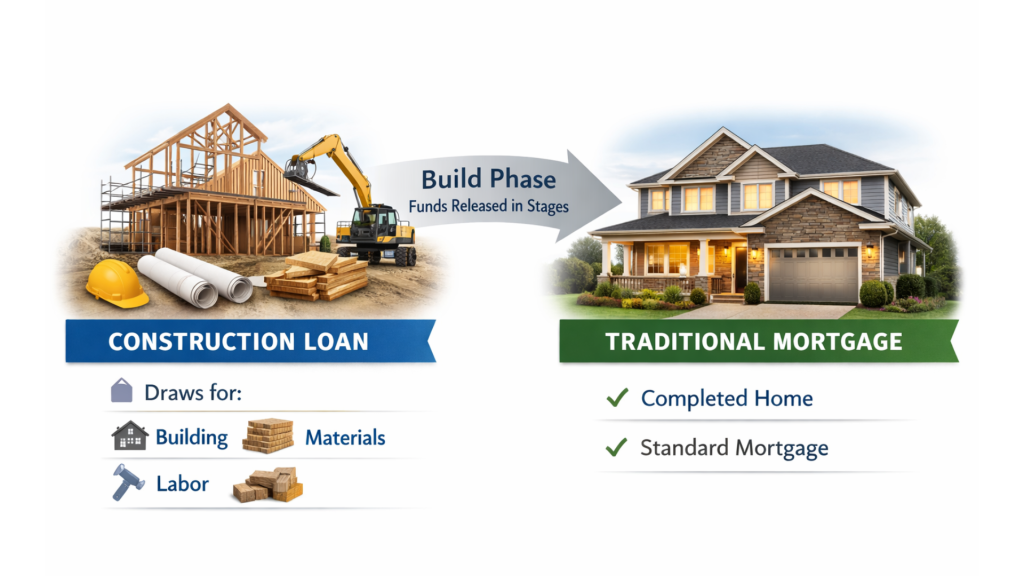
A construction loan isn’t a separate type of mortgage so much as a mortgage with an extra phase added at the beginning.
Instead of financing a finished home, a construction loan funds the build itself. During construction, money is released in stages, called draws, to cover labor, materials, permits, and progress on the home. Once construction is complete, the loan converts into a traditional mortgage, just like the one you’d have if you bought an existing house.
So while the term “construction loan” sounds intimidating, the end result is familiar: a standard mortgage on a completed home.
One-Time Close vs. Two-Time Close: Why This Matters More Than You Think
One of the most important financing decisions you’ll make is whether to use a one-time close or a two-time close construction loan.
Historically, most homeowners used two-time close loans. With this approach, you close once to fund construction and then close again when the home is complete to secure your permanent mortgage. While this gives you flexibility to shop lenders later, it also comes with risk. You must re-qualify at the end of construction, pay a second set of closing costs, and complete another appraisal.
If your financial situation changes during the build—job changes, income shifts, unexpected expenses—that second qualification can become stressful or even impossible.
A one-time close construction loan removes much of that uncertainty. You qualify once at the beginning, lock your permanent mortgage upfront, and the loan automatically converts after construction. There’s no second closing, no re-qualification, and often no additional closing costs.
Even better, many one-time close loans allow for a free rate float-down at the end of construction. That means if interest rates improve while your home is being built, you can benefit without the downside risk if rates rise.
For many custom home builds, especially higher-end or rural projects, one-time close loans offer significantly more peace of mind.
How Much Cash Do You Actually Need to Build a Custom Home?
This is one of the most common, and most misunderstood, questions homeowners ask.
The required cash to close depends on the type of loan you choose. Conventional construction loans often require around 5% down. FHA loans typically require 3.5%. VA and USDA construction loans may require no down payment at all for qualified borrowers.
What surprises many people is that this percentage applies to the entire project: the land and the construction combined. With a one-time close loan, you can often purchase land and fund the build simultaneously, instead of needing to buy the land years in advance.
VA and USDA Construction Loans: Powerful, but Very Different
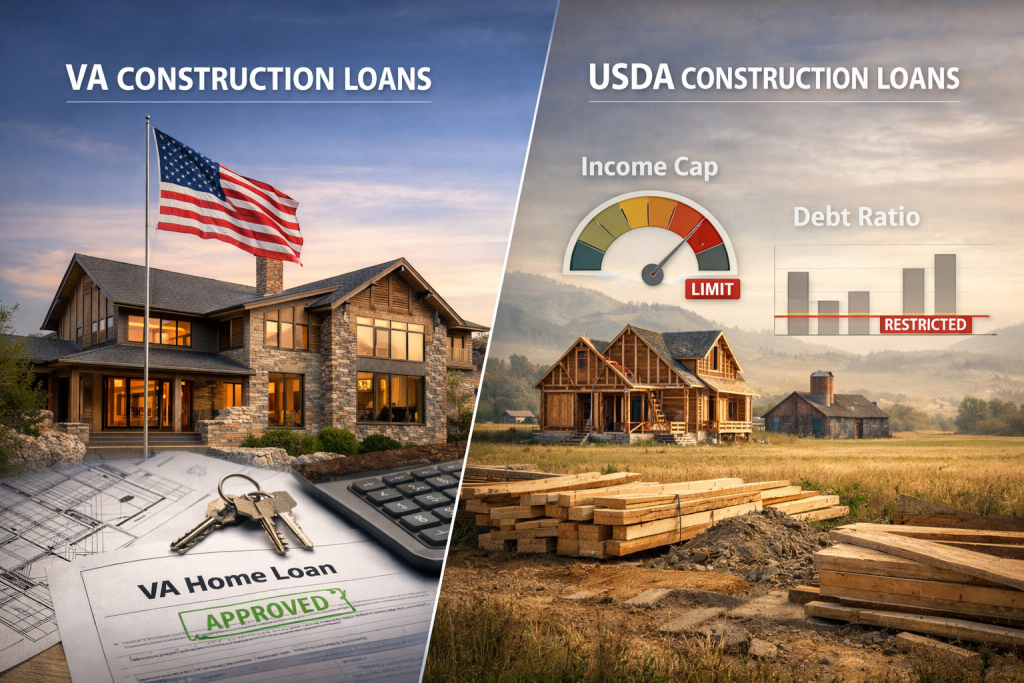
VA construction loans offer unique advantages that many veterans don’t realize are available for new builds. There’s no down payment requirement, no formal loan cap, and more flexibility in debt-to-income ratios. This allows qualified veterans to build higher-value homes without the restrictions found in conventional loans.
USDA construction loans, on the other hand, are excellent in theory but more restrictive in practice. While they offer zero down payment and are ideal for rural properties, they come with strict income caps and lower allowable debt-to-income ratios. Many homeowners qualify for the land but not the loan itself.
If you meet the criteria, USDA loans can be fantastic, but they aren’t as flexible as many people expect.
When to Talk to a Lender (Hint: Sooner Than You Think)
One of the biggest mistakes homeowners make is waiting too long to talk to a lender.
Ideally, that conversation should happen when you start thinking about buying land, when you already own land and begin talking to builders, or even when you believe you may want to pay cash.
Why? Because financing options shrink dramatically once construction begins.
Many homeowners start a build planning to pay cash, only to realize halfway through that tying up that much capital isn’t ideal. Unfortunately, once construction is underway and there’s no certificate of occupancy, lending options are extremely limited.
Early conversations create flexibility. Late conversations create problems.
Why Paying All Cash Isn’t Always the Best Strategy
Even if you have the ability to pay cash for a build, it doesn’t always mean you should.
Financing part of the project can preserve liquidity, allow you to keep capital invested elsewhere, and give you options later. With a one-time close loan, you can still reduce your loan balance at conversion or make additional principal payments after the home is complete.
Smart financing isn’t about avoiding debt at all costs. It’s about using it strategically.
How Appraisals Work on Custom Homes
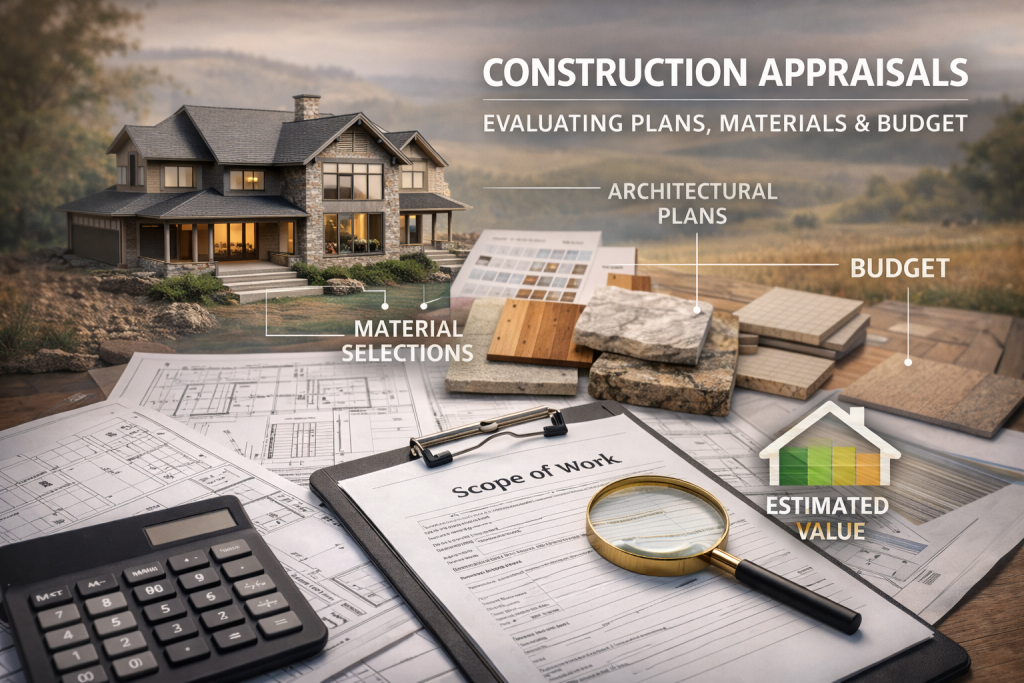
Construction appraisals are based on projected value, not existing structures. Appraisers evaluate architectural plans, construction budgets, material selections, and comparable homes in the area.
The more unique or remote the property, the harder it can be to find comparable sales. That’s why detailed documentation (materials, finishes, scope of work) is so important. When appraisers understand the quality and intent of the build, valuations are often stronger and more accurate.
Can You Finance a Shop, Pool, or Additional Structures?
In many cases, yes. Shops, pools, garages, and accessory dwellings can often be included in a single construction loan, as long as the total project value supports it.
The more customized the property becomes, the more important appraisal strategy and early planning are. These features are easiest to finance when they’re included from the beginning.
Do You Have to Sell Your Current Home Before You Build?
Not necessarily.
In certain scenarios, homeowners can build their new home while staying in their existing one, then sell once construction is complete. This avoids temporary housing, RV living, or moving twice which is an option many people don’t realize exists.
Planning this correctly can make the transition far smoother.
Interest Rates: Important, but Not the Whole Story
Interest rates fluctuate daily based on economic conditions, employment data, and market sentiment. They matter BUT they aren’t the only factor.
What doesn’t fluctuate is the cost of land and construction. Both trend upward over time.
One-time close construction loans allow homeowners to lock a worst-case rate, benefit if rates improve, and refinance later if needed. Waiting indefinitely for the “perfect” rate often results in higher overall costs.
Buying Down the Rate: When It Makes Sense
Buying down an interest rate by paying points can be a useful tool, but only if used intentionally. Points may be tax deductible (consult your CPA), and they only make sense if you plan to stay in the loan long enough to recoup the cost.
It’s an option, not a requirement—and one that should be evaluated carefully.
Why the Right Team Makes All the Difference
Financing a custom home isn’t just about choosing a loan. It’s about working with a builder and lender who understand construction from start to finish.
That’s why Clark Custom Homes partners with experienced construction lenders like New American Funding—to help homeowners plan intelligently from day one, avoid common pitfalls, and move through the process with confidence.
If you’re considering building a custom home, starting the financing conversation early is one of the smartest decisions you can make.
